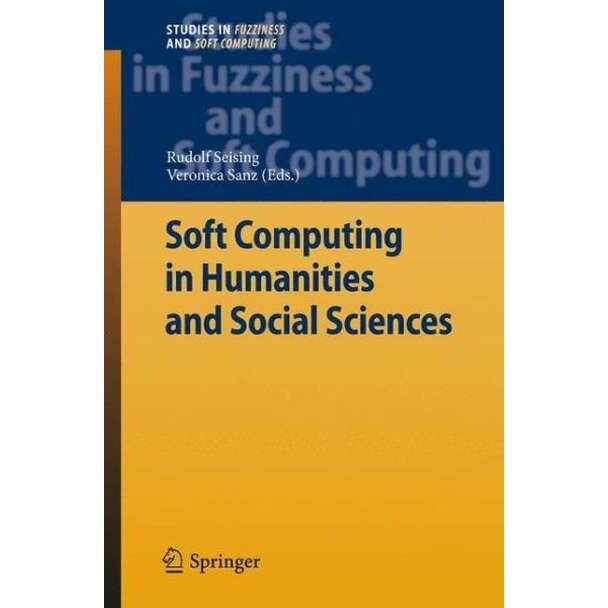
The
field
of
Soft
Computing
in
Humanities
and
Social
Sciences
is
at
a
turning
point.
The
strong
distinction
between
“science”
and
“humanities”
has
been
criticized
from
many
fronts
and,
at
the
same
time,
an
increasing
cooperation
between
the
so-called
“hard
sciences”
and
“soft
sciences”
is
taking
place
in
a
wide
range
of
scientific
projects
dealing
with
very
complex
and
interdisciplinary
topics.
In
the
last
fifteen
years
the
area
of
Soft
Computing
has
also
experienced
a
gradual
rapprochement
to
disciplines
in
the
Humanities
and
Social
Sciences,
and
also
in
the
field
of
Medicine,
Biology
and
even
the
Arts,
a
phenomenon
that
did
not
occur
much
in
the
previous
years.
The
collection
of
this
book
presents
a
generous
sampling
of
the
new
and
burgeoning
field
of
Soft
Computing
in
Humanities
and
Social
Sciences,
bringing
together
a
wide
array
of
authors
and
subject
matters
from
different
disciplines.
Some
of
the
contributors
of
the
book
belong
to
the
scientific
and
technical
areas
of
Soft
Computing
while
others
come
from
various
fields
in
the
humanities
and
social
sciences
such
as
Philosophy,
History,
Sociology
or
Economics.
Rudolf
Seising
received
a
Ph.D.
degree
in
philosophy
of
science
and
a
postdoctoral
lecture
qualification
(PD)
in
history
of
science
from
the
Ludwig
Maximilians
University
of
Munich.
He
is
an
Adjoint
Researcher
at
the
European
Centre
for
Soft
Computing
in
Mieres
(Asturias),
Spain.
Veronica
Sanz
earned
a
Ph.D.
in
Philosophy
at
the
University
Complutense
of
Madrid
(Spain).
At
the
moment
she
is
a
Postdoctoral
Researcher
at
the
Science,
Technology
and
Society
Center
in
the
University
of
California
at
Berkeley.
Veronica
Sanz
earned
a
Ph.D.
in
Philosophy
at
the
University
Complutense
of
Madrid
(Spain).
At
the
moment
she
is
a
Postdoctoral
Researcher
at
the
Science,
Technology
and
Society
Center
in
the
University
of
California
at
Berkeley.
Textul de pe ultima coperta
The
field
of
Soft
Computing
in
Humanities
and
Social
Sciences
is
at
a
turning
point.
The
strong
distinction
between
“science”
and
“humanities”
has
been
criticized
from
many
fronts
and,
at
the
same
time,
an
increasing
cooperation
between
the
so-called
“hard
sciences”
and
“soft
sciences”
is
taking
place
in
a
wide
range
of
scientific
projects
dealing
with
very
complex
and
interdisciplinary
topics.
In
the
last
fifteen
years
the
area
of
Soft
Computing
has
also
experienced
a
gradual
rapprochement
to
disciplines
in
the
Humanities
and
Social
Sciences,
and
also
in
the
field
of
Medicine,
Biology
and
even
the
Arts,
a
phenomenon
that
did
not
occur
much
in
the
previous
years.
The
collection
of
this
book
presents
a
generous
sampling
of
the
new
and
burgeoning
field
of
Soft
Computing
in
Humanities
and
Social
Sciences,
bringing
together
a
wide
array
of
authors
and
subject
matters
from
different
disciplines.
Some
of
the
contributors
of
the
book
belong
to
the
scientific
and
technical
areas
of
Soft
Computing
while
others
come
from
various
fields
in
the
humanities
and
social
sciences
such
as
Philosophy,
History,
Sociology
or
Economics.
Rudolf
Seising
received
a
Ph.D.
degree
in
philosophy
of
science
and
a
postdoctoral
lecture
qualification
(PD)
in
history
of
science
from
the
Ludwig
Maximilians
University
of
Munich.
He
is
an
Adjoint
Researcher
at
the
European
Centre
for
Soft
Computing
in
Mieres
(Asturias),
Spain.
Veronica
Sanz
earned
a
Ph.D.
in
Philosophy
at
the
University
Complutense
of
Madrid
(Spain).
At
the
moment
she
is
a
Postdoctoral
Researcher
at
the
Science,
Technology
and
Society
Center
in
the
University
of
California
at
Berkeley.
Veronica
Sanz
earned
a
Ph.D.
in
Philosophy
at
the
University
Complutense
of
Madrid
(Spain).
At
the
moment
she
is
a
Postdoctoral
Researcher
at
the
Science,
Technology
and
Society
Center
in
the
University
of
California
at
Berkeley.